How to Choose a Travel Stroller: 8 Checks Before You Buy
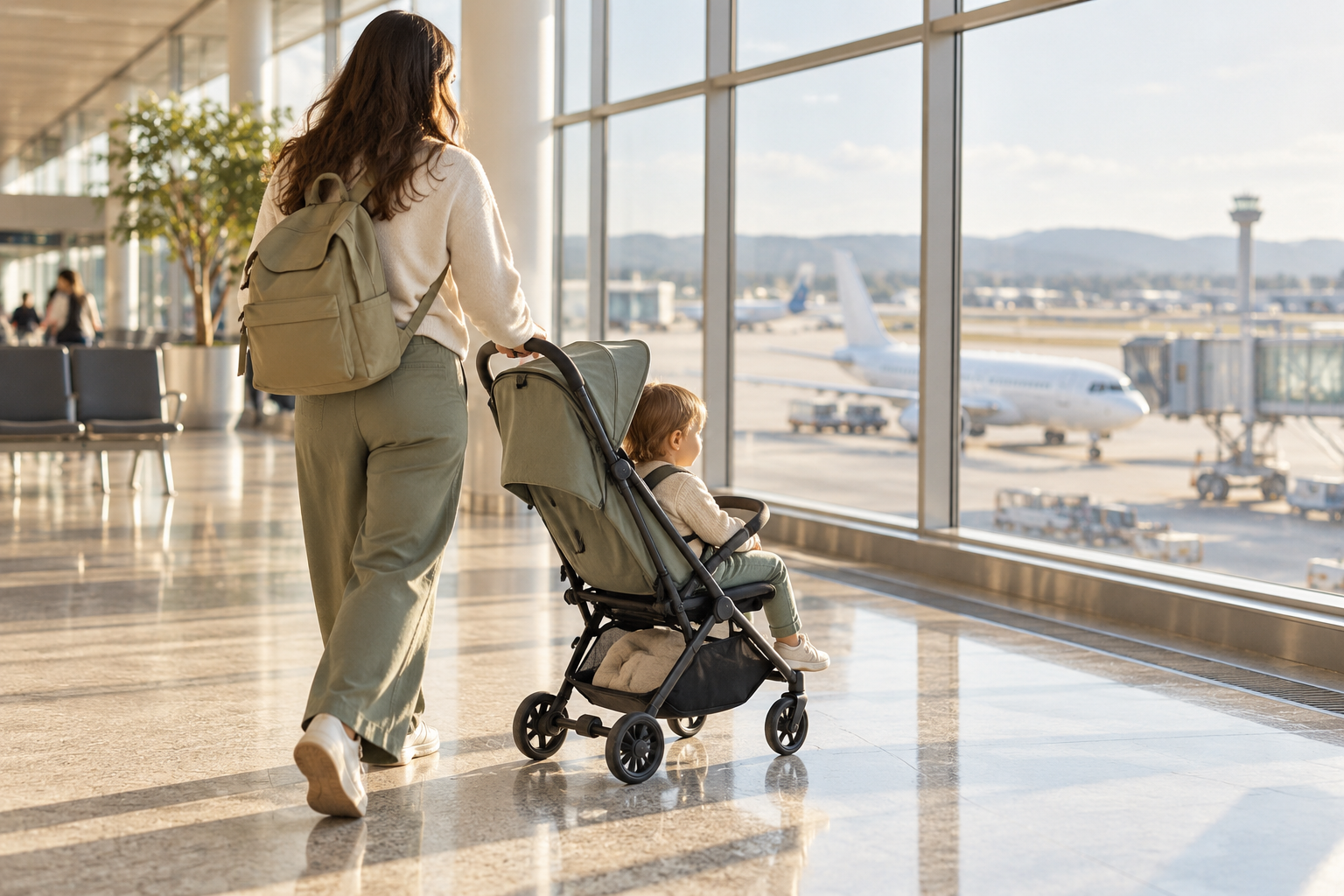
Picture this: boarding starts in five minutes. Your toddler wants to walk, your coffee is going cold, and the stroller needs two hands and a small negotiation to fold.
That is the moment a travel stroller has to earn its place.
If you’re wondering how to choose a travel stroller, start with the awkward parts of your trips: stairs, trunk space, long walks and airport transfers. A tiny folded size is useful only if the rest of the stroller works for your family.
1. Pick your travel situation first
Imagine two families shopping for the same stroller.
One lives in a walk-up apartment and carries it upstairs every evening. The other drives to weekend getaways with a trunk full of luggage. Both want something “compact,” but they need different things from it.
Use the situation closest to yours as your starting point:
Write your three priorities on your phone. That short list is your filter when every product page starts sounding perfect.
2. Check child fit before you fall for the fold
Start with the exact model’s manual. Look for minimum age, weight limits and approved configurations, including any infant car seat or bassinet attachments.
“Newborn compatible” may depend on a particular accessory. It does not necessarily mean the regular stroller seat is suitable from birth.
For a toddler, check the usable seat space and foot support, too. A published weight limit cannot tell you whether your child will feel comfortable in the seat.
The CPSC’s stroller restraint guidance explains why the harness matters every time your child rides.
One more distinction: recline is a comfort feature, not a promise of a safe infant sleep space. The AAP’s safe-sleep guidance advises moving a baby who falls asleep in a stroller to a firm, flat sleep surface on their back as soon as possible.
3. Give “compact” a tape-measure test
A product photo makes almost any folded stroller look small. Your trunk opening is less forgiving.
Check all three folded dimensions: length, width and height. Confirm whether the measurements include the wheels and bumper bar, and whether you must remove anything to achieve that fold.
Then measure the place where it needs to fit.
- Car: measure the opening and usable space with your usual bags inside.
- Home: measure the closet or entryway, including room to open the door.
- Travel bag: compare usable interior dimensions with the stroller’s packed configuration.
For a small car, think about the loading sequence as well. Can the stroller come out without unloading everyone’s luggage?
A trunk-fit example you can copy
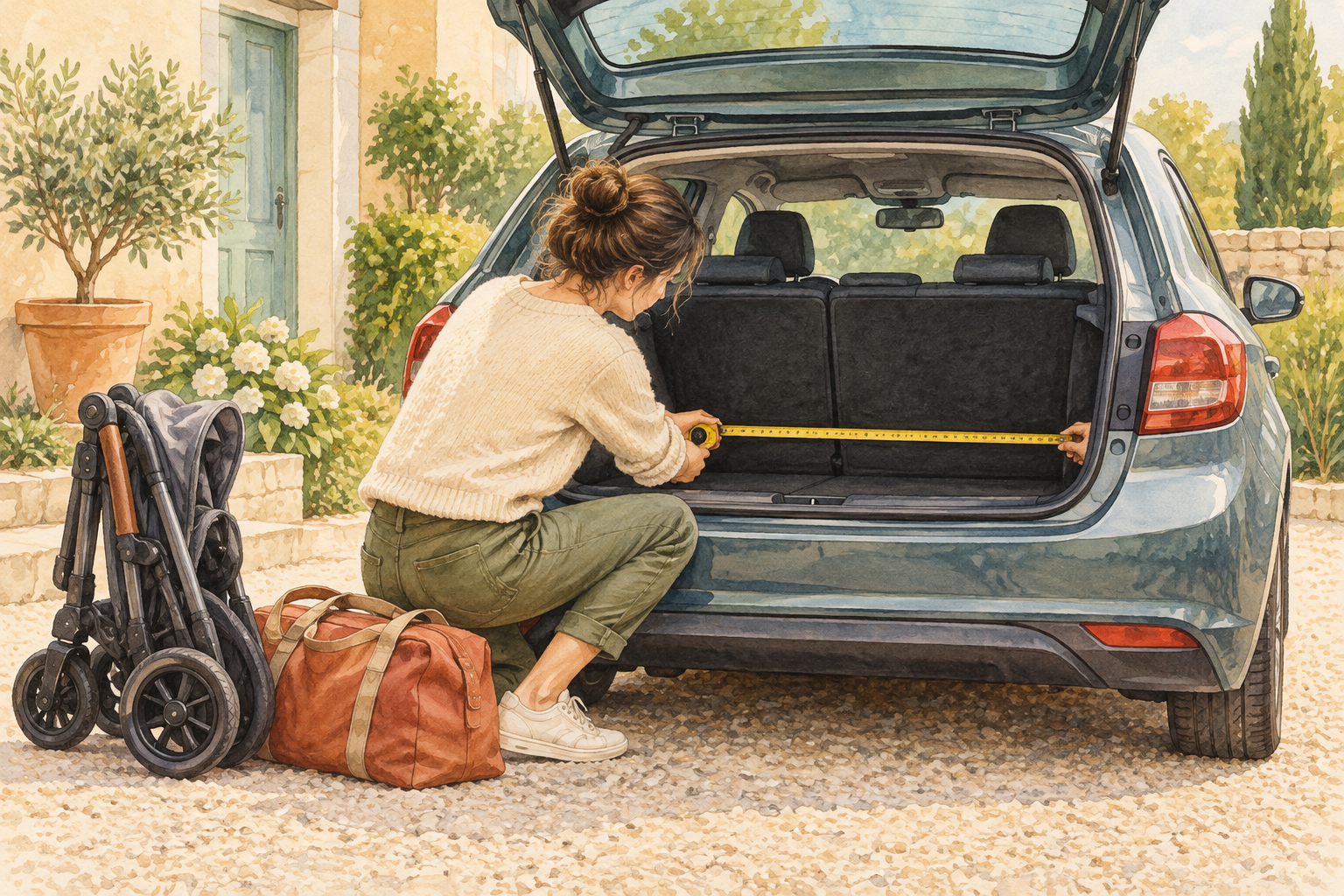
Suppose you are leaving on Friday with one stroller, two weekend bags and a box of supplies for the baby. The stroller fits in your trunk when everything else is on the driveway. That is a start, but it does not answer the useful question: can you load the whole trip?
Put the bags you usually take in first, then look at the space available for the stroller. Try the reverse order as well. You may discover that one arrangement lets you remove the stroller for a rest stop without moving anything else.
If you are comparing dimensions online, sketch a simple rectangle for each folded stroller. Label its three measurements and the configuration used. Do not mix inches and centimeters, or compare one stroller with wheels removed against another with every accessory attached.
Take a photo of your empty trunk and another with the usual luggage in place. Keep the photos beside your measurements when you visit a store. They give you something concrete to discuss with the salesperson.
Give yourself room to use the fit
An exact mathematical match can still be awkward in practice. The trunk lip, curved trim or angle of the opening can get in the way. A bag around the stroller adds bulk, too.
Leave yourself a workable grip rather than planning to wedge the frame tightly between luggage. You will need to load it when the weather is poor, the parking space is narrow or everyone is ready to leave.
For an in-store fit trial, ask permission and follow the retailer’s process. Never force the trunk closed or remove stroller parts in ways the manual does not support. When the fit depends on a complicated sequence, decide whether you are happy repeating that sequence on an ordinary Tuesday.
The same thinking applies at home. A folded stroller that technically fits in a closet can still be frustrating if it blocks the vacuum, coats or the door. Storage should work with the rest of the household.
4. Test the carry, not just the weight
A lighter stroller can still be awkward to lift if there is nowhere comfortable to hold it.
If you can visit a store, fold the stroller and carry it a short distance. Try the handle or strap you would actually use. Keep the child out of the stroller during this check.
Notice whether the frame bumps your leg, unfolds unexpectedly or feels poorly balanced in your hand. Those details are difficult to judge from a spec sheet.
Check the listed weight carefully, too. Does it include the accessories you intend to leave attached?
5. Rehearse the fold before the airport does it for you
Watch the manufacturer’s instructions, then try the sequence yourself.
A “one-hand fold” still needs practice. You may need to set the seat in a particular position, empty the basket or remove an accessory first.
- Fold and unfold it more than once.
- Confirm the folding lock engages as directed.
- Check where the folded stroller rests and whether it stands without support.
- Keep children clear of moving parts.
Think about your arrival as well as departure. Opening the stroller beside a taxi should feel manageable, not like solving a puzzle with an audience.
6. Check what the small frame gives up
Compact designs involve trade-offs. Decide which ones you can comfortably live with.
Basket access is a good example. A basket may look roomy until the seat reclines or your diaper bag will not pass through the opening.
Try that access with a bag similar in size to yours. Follow the basket’s load limit, and do not hang bags on the handle unless the manual permits it.
For longer outings, compare canopy coverage, seat adjustment and foot support. If possible, try steering on a representative surface. A smooth showroom floor tells you little about an uneven sidewalk.
Try a ten-minute store visit with a purpose
It is easy to spend a whole store visit comparing colors. Arrive with a small plan and you will learn more about whether a stroller suits you.
First, ask for the exact model name and find its manual. If you are looking at last year’s display model, confirm whether the version being sold has the same fold, seat and included accessories.
Next, try adjusting the handle if it is adjustable. Walk normally and notice whether your stride catches the rear frame. If two adults will use the stroller, both should try it rather than assuming one person’s comfortable handle height works for the other.
Then check the basket with your usual bag, keeping within the stated limit. Can you reach a diaper pouch through the opening without taking out everything else? A large basket you cannot easily access may be less useful than the photograph suggests.
Finally, fold, lift and reopen the empty stroller. Ask the salesperson to show you anything you cannot operate smoothly. There is nothing wrong with needing a demonstration; the point is knowing the sequence before you buy.
What to look for in a travel stroller for a toddler
For a child who alternates between walking and riding, easy access and a practical harness routine can matter as much as the fold.
Check the seat and footrest against the manual and your child’s size. Think about how you will use the stroller when your toddler decides to walk halfway through an outing. Will you push it empty, fold it, or carry it while another adult holds the child’s hand?
Keep the assessment realistic. A stroller does not have to solve every family outing. It does need to work for the ones you expect it to handle most often.
7. Make a flight plan with a gate-check backup
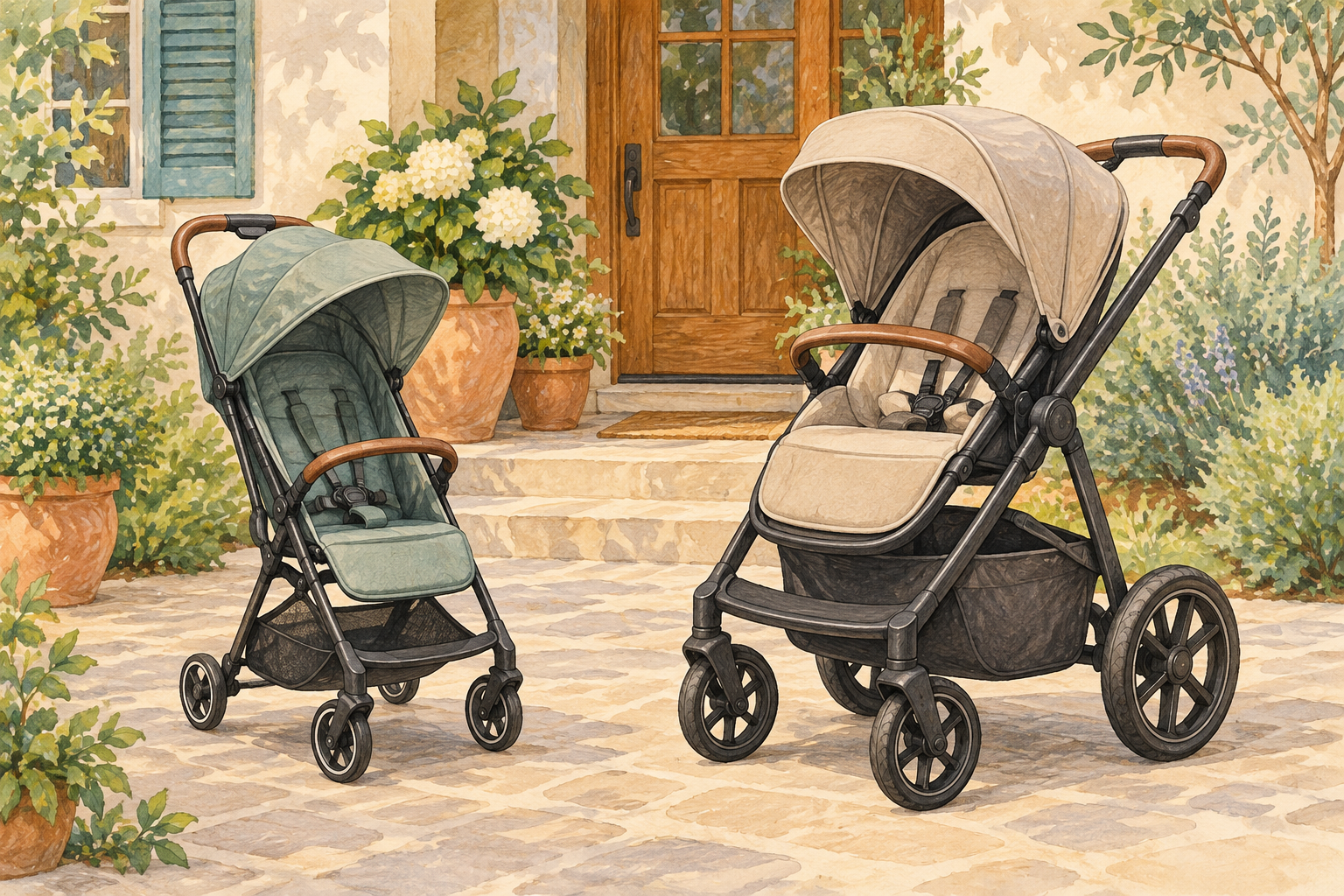
“Cabin size” on a stroller listing is not an airline boarding pass.
Check your carrier’s stroller policy and carry-on dimensions, including rules for partner-operated flights. Ask about cabin acceptance, gate checking and where the stroller will be returned after landing.
For example, Delta’s stroller baggage policy explains its check-in and gate-check options. Use the United traveling-with-children page for United itineraries.
Security is a separate step. Read TSA’s guidance for traveling with children so you know what to expect at the checkpoint.
The answer matters especially when you have a connection and a child who cannot walk the terminal.
8. Compare the complete cost
Put the stroller and the accessories you will actually need on the same shopping list.
A carry bag, adapter or rain cover can change the total. Check what is included, the return policy, warranty terms and availability of replacement parts.
Before buying, look up the exact model in the CPSC recall database and check the manufacturer’s safety notices. For a used stroller, verify the version and identifying labels rather than relying on a similar-looking product photo.
Buying, borrowing or renting: which makes sense?
You do not automatically need a second stroller because a trip is coming up. Start by asking whether the stroller you already own can do the job with a manageable packing plan.
Borrowing can help you learn what you like before purchasing. Check the exact model, instructions, condition and recall history first. Familiarity with the owner does not replace those checks, and a missing part should not become a travel-day improvisation.
Renting may suit a destination where you need a stroller for several days but not during the journey. Ask what exact model will be supplied, when it arrives, what happens if it is unavailable and how problems are handled.
Compare the complete arrangement. A rental waiting at the hotel will not help you move through the airport before you get there. A borrowed larger stroller may save money but require a different car-loading plan.
For frequent flights, an additional compact stroller may be worthwhile if it consistently removes a problem. Write down that problem in one sentence. “I need to carry it up two flights of stairs” is a useful reason. “Everyone seems to have this one” gives you much less to evaluate.
A used stroller deserves a slower inspection
Ask for clear photos of the product label and any model or serial information before arranging a visit. Use those details to find the correct manual and search for recall notices.
Check whether all required parts are present. Ask about repairs, damage and storage. If a seller cannot identify the model or a folding lock does not work as instructed, keep looking.
Cosmetic wear and a functional problem are different things. A scuffed frame may not tell you much; a brake that will not hold or a missing harness component needs a proper resolution before use.
When in doubt, ask the manufacturer about the specific issue. Do not assume a spare part from a similar-looking stroller is compatible.
A few questions that often come up
Can one travel stroller be your everyday stroller? Possibly, if its child fit, storage, handling and approved uses match your daily routine. The category name alone cannot answer that.
Is the smallest fold always worth paying more for? Only if those saved inches solve a real problem for you. If both candidates fit your space comfortably, another difference may matter more.
Should you buy for a future trip you have not booked? Be careful about making an uncertain airline cabin rule the deciding factor. Choose for the family routine you know, then verify the requirements of the trip you eventually book.
A useful purchase is one you can explain in everyday terms: it fits, you can carry it, and your child can use it in the intended configuration.
Your five-minute shortlist
Give each candidate a simple “yes,” “no” or “needs checking” against these questions:
- Child fit: Is our planned configuration approved in the manual?
- Storage: Does the folded stroller fit our actual space?
- Carry: Can the person using it lift and carry it comfortably?
- Daily use: Can we fold it, reach the basket and manage our usual terrain?
- Travel: Do we have an airline plan and a gate-check backup?
- Cost: Have we included necessary accessories and checked recalls?
A “no” on a must-have is a reason to keep looking. An unanswered question is a reason to investigate before paying.
The aim is a stroller that makes your next trip easier from your front door onward. Choose for that whole journey, and the impressive fold becomes a useful bonus.